
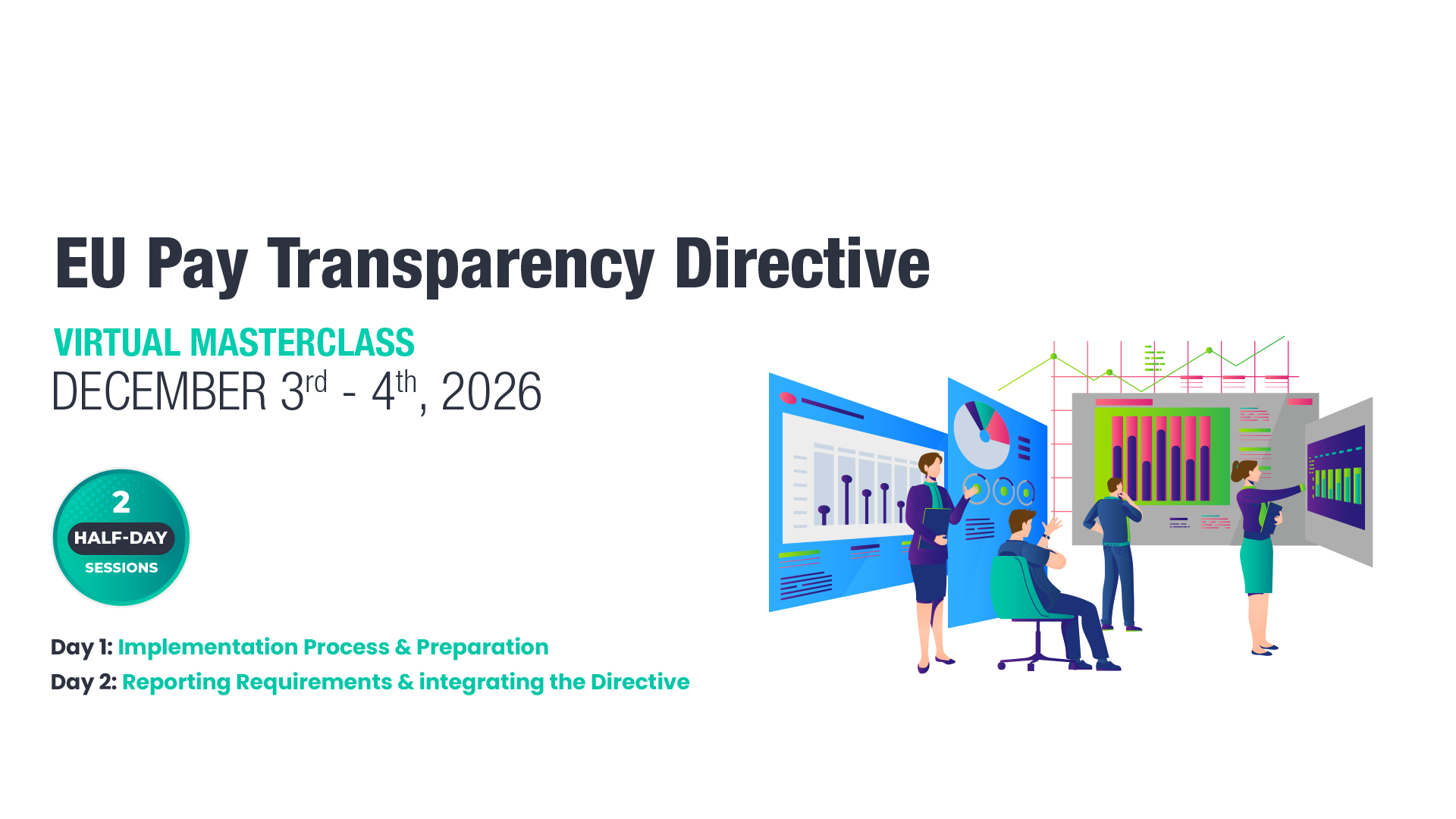


The EU Pay Transparency Directive comes into effect in June 2026, introducing binding measures across all 27 EU member states that affect recruitment, pay-setting, employee information rights, and gender pay gap reporting. For employers with 150 or more employees, the earliest gender pay gap reports using 2026 pay data are due by June 2027.
The Directive requires employers to provide starting salary ranges or salaries in job advertisements, respond to employee requests for pay information, and ensure pay structures are built on objective, gender-neutral criteria. Where a pay gap of 5% or more is identified within any category of workers and cannot be justified by objective, gender-neutral criteria, employers must take remedial action within six months as part of conducting a joint pay assessment with employee representatives.
This masterclass provides practical guidance on implementing the Directive's requirements. Over two half-day sessions, you will work through the implementation process, understand the impact across HR and other teams, explore how to engage with workers' representatives, and prepare for the reporting requirements ahead.
Led by Rachel Gibbs, a senior rewards specialist with deep expertise in job architecture, salary benchmarking, and reward governance, this programme combines technical precision with practical and continuing commercial insight. Whether you are refining your approach or addressing gaps in your current processes, this masterclass will equip you with the frameworks and knowledge to meet your obligations.


Understand the objectives and requirements of the EU Pay Transparency Directive now in effect, including the legal basis and implementation approach across EU member states.
Know how to evaluate and categorise roles to meet the Directive's requirements for equal value assessments.
Understand the data requirements and quality standards needed for pay equity analysis and gender pay gap reporting.
Learn how to document pay determinants and implement remediation where gaps are identified.
Understand the role and responsibilities of Workers' Representatives and key considerations for engaging with them.
Know how to respond to employee right to information requests and meet gender pay gap reporting obligations.
Understand when joint pay assessments are required and how to conduct them.
Learn how to manage pay transparency requirements through existing processes, including implications for salary benchmarking, executive pay, and pay governance.


Rachel is a senior rewards specialist with over a decade of experience advising organisations across the life sciences industry, including biotech, pharmaceutical, and medtech companies. She has collaborated with both growing and established global employers, supporting leadership teams across Europe and internationally to design reward strategies that attract, retain, and motivate highly skilled talent.
With a background in employment taxation and deep expertise in job architecture, salary benchmarking, and reward governance, Rachel combines technical precision with commercial insight. Her approach emphasises helping organisations gain a competitive edge through pay and reward, ensuring frameworks are competitive, sustainable, and aligned with business strategy.
Clients appreciate Rachel's collaborative style, strategic clarity, and practical advice. Through Merities Consulting, she partners closely with HR and business leaders to develop reward structures that support profitable growth, enable fair and consistent decision-making, and strengthen the connection between talent, performance, and long-term success.



.webp)


